

Measure the System, Not the Person: The Hidden Gaps in Self-Assessment

Most organizations invest heavily in developing their people - personality profiles, off-sites, leadership programs. At the end of these sessions, teams leave feeling aligned and capable.
But when they return to the day-to-day, the momentum fades. Insights from the off-site fall off the “business as usual” cliff, and old patterns quietly take over.
And the team still struggles to perform at its peak.
When this happens, the reflex is to assume the team needs more coaching or a different assessment. But leaders in this situation are trying to solve the wrong problem. They are trying to fix the individual, when the friction actually lives in the system.
Solving the Wrong Problem
When a capable group starts to stall, the default approach is to evaluate the people. This exposes a critical limitation in leadership development: self-awareness alone does not translate into team performance.
You can have a group full of capable, self-aware individuals who genuinely care about the mission, and the team can still struggle to execute.
Why? Because performance does not break down inside individuals. It breaks down in the space between them.
When that space isn't managed, the friction is invisible. But the cost is not. The impact of performance loss compounds quietly over time - in a slowed handoff, a decision that circles back or through unspoken tension. Over time, the system begins to rely on individual effort just to maintain momentum.
The Gap Between Intention and Interaction
Personality assessments are valuable tools for building individual awareness, but they have a specific limit: they capture individual intention.
They show how individuals prefer to work. What they do not show is how behavior actually changes when timelines tighten and priorities shift.
This is exactly why personality tests don’t improve team performance on their own. They describe isolated traits, but provide limited visibility into how those traits interact under pressure.
Under pressure, people instinctively revert to familiar patterns or behavior. If leaders only understand a person’s preferred communication style, they remain blind to how that person will show up under pressure.
What It Means to Measure the System
Teams don’t underperform because individuals don’t know what to do.
They fail in how decisions get made, how ownership moves, and how tension is handled under pressure.
Taking a systemic approach to team performance means shifting the focus away from personal traits and toward how the team actually operates together - how decisions are made, how ownership carries through a handoff, how tension is handled when priorities clash, and how work flows across roles.
What often looks like an individual failing is actually friction hiding in these interactions. If the system is misaligned, human instincts will continuously create team collaboration issues, no matter how much self-awareness training the group has received.
From Invisible Symptoms to Systemic Patterns
Most team culture measurement stops at evaluating how people feel. This leaves leaders managing invisible symptoms rather than addressing the root cause of their team performance gaps.
We don’t improve a team’s execution by improving individuals in isolation. We improve it by making the invisible system visible.
If a team is facing an execution slowdown, the answer is not another personality test. When leaders want to know how to understand what’s shaping their team’s performance, they need to bring the hidden dynamics of the team into clear focus.
When you measure the system instead of the person, you stop interpreting symptoms, and you start building a team that can sustain high performance under pressure.
Bring the System Into Focus
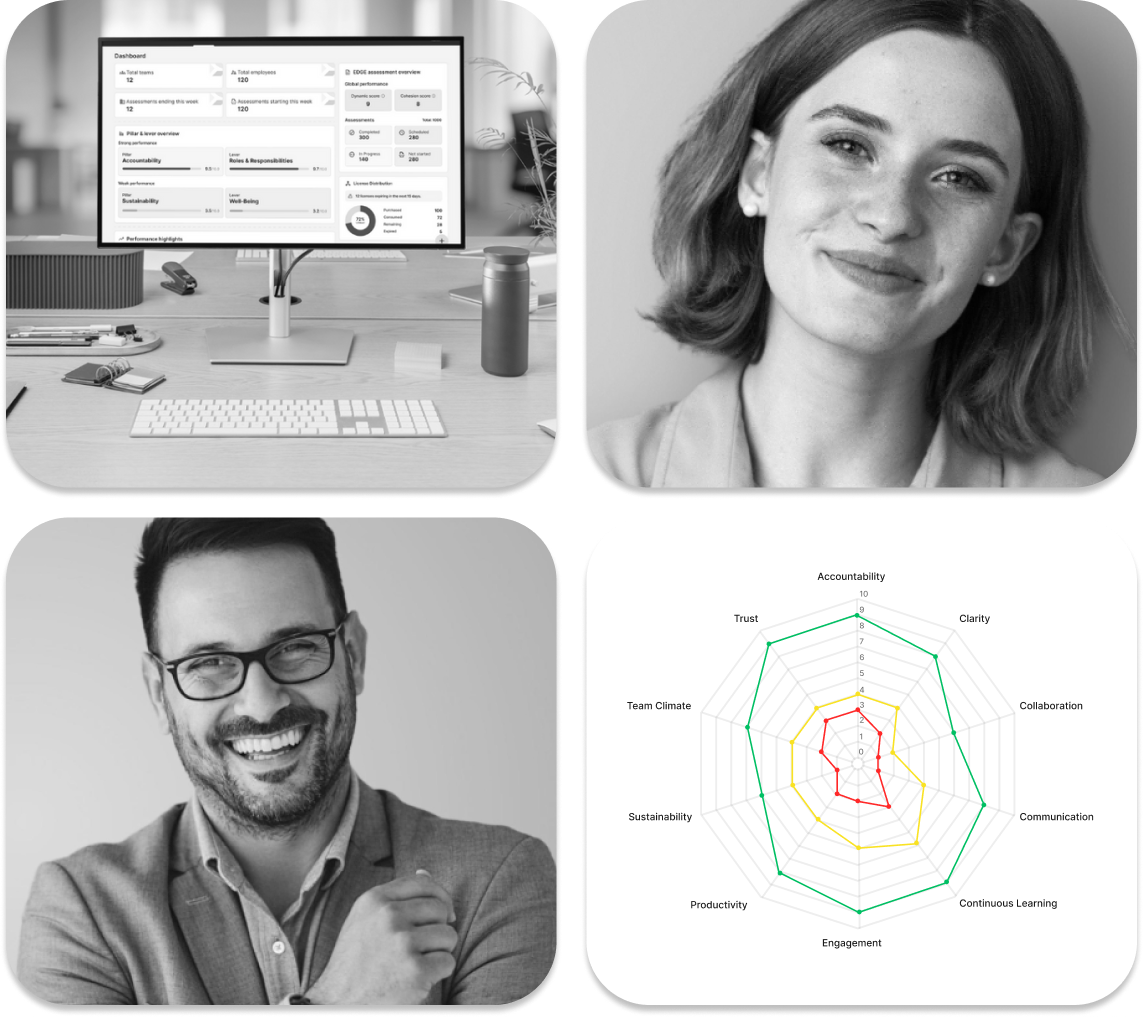
Closing this gap requires making the system visible. Grozaic’s Team Dynamics Assessment moves beyond individual traits to map how your team actually operates together. By surfacing the behavioral and systemic patterns that shape execution, it gives leaders the clarity needed to move from managing symptoms to intentionally designing high performance.