

The Humans Behind Team Performance: Why Talent Alone Doesn’t Win

This message has been landing consistently in the rooms I’ve been in lately - from executive summits to industry conferences - and it applies across sectors.
Every organization is grappling with how to integrate AI, data, and automation into the way they work. You cannot attend a leadership forum today without hearing about machine learning, digital transformation, or the future of work.
Yet one critical factor continues to be underestimated.
The human behind the technology still determines the outcome.
In fact, it matters more than ever.
Because if you feed misalignment, poor communication, or low trust into sophisticated systems, you will still get poor outcomes.
Rubbish in equals rubbish out.
And this is not a technology problem. It is a team performance problem.
Across industries - technology, finance, health, consulting, government - one pattern keeps surfacing.
Talent is rarely the issue.
Misalignment is.
Even highly capable teams stall when cohesion, clarity, and communication weaken. The signs are often subtle at first - until performance slows, decisions stall, or people burn out.
Below are five recurring levers that quietly undermine team performance.
1. Emotional Regulation Under Pressure
This is not about remaining calm at all times. It is about how a team behaves when pressure rises.
Under stress, do people become reactive, defensive, or withdrawn? Do feedback loops close down just when they are most needed? Does urgency drive reflection - or impulsivity?
When tension has no productive outlet, it leaks into side conversations, missed handovers, and fatigue. Over time, unregulated pressure erodes trust and accountability.
2. Conflict Avoidance
Disagreement is normal. Avoidance is costly.
When difficult conversations are delayed or softened to preserve comfort, underlying issues remain unresolved. Feedback becomes diluted. Recurring friction resurfaces in new forms.
Healthy conflict sharpens thinking. Avoided conflict compounds problems.
Teams that cannot engage tension constructively will eventually pay for it in performance.
3. Power Dynamics and Influence Traps
Power does not only exist in hierarchy. It appears in confidence, tenure, expertise, personality, and control of information.
Are decisions shaped by who speaks most, rather than who sees most clearly? Do people withhold perspective to avoid judgment or shutdown? Does ego - loud or subtle - narrow the conversation?
Often these patterns are unconscious. But the effect is consistent: reduced trust, constrained thinking, and weaker decisions.
4. Participation Gaps
A team cannot leverage its full intelligence if only part of it is contributing.
When the same voices dominate and others retreat, insight is lost. Introverts, newer team members, or those outside informal power circles may disengage quietly.
Innovation depends on cognitive diversity. Without structures that invite varied participation, cohesion weakens and ownership narrows.
5. Performance Balance and Recovery
Many teams are not underperforming. They are over-functioning.
High performers absorb additional responsibility. Urgency becomes constant. Reflection disappears. Recovery is seen as indulgence rather than necessity.
Without rhythm and recalibration, sustainability erodes. Over time, burnout replaces drive, and performance becomes fragile.
The World Cup Analogy
Imagine a national soccer team filled with elite players in every position.
The most skilled striker. The fastest winger. The sharpest goalkeeper.
If they do not trust one another, coordinate effectively, or align on strategy, they will not win.
Now imagine a cohesive team that lacks preparation, conditioning, or strategic clarity. They will not win either.
High performance requires both capability and cohesion.
The same is true inside organizations. Leadership teams often consist of brilliant individuals operating within misaligned systems. Strong players, weak coordination. High effort, inconsistent execution.
Unlike the World Cup, workplace dysfunction is rarely visible on a scoreboard. It reveals itself gradually - in stalled initiatives, duplicated effort, quiet disengagement, and attrition.
Where the Opportunity Sits
The solution is not a wholesale overhaul. It begins with clarity.
Where is friction truly occurring? Which dynamic is limiting performance? Which lever, if strengthened, would create disproportionate lift?
High-performing teams are not driven by talent alone. They are strengthened by clarity around roles and priorities, consistent and direct feedback, shared ownership of outcomes, and disciplined recovery rhythms.
Performance is not accidental. It is engineered.
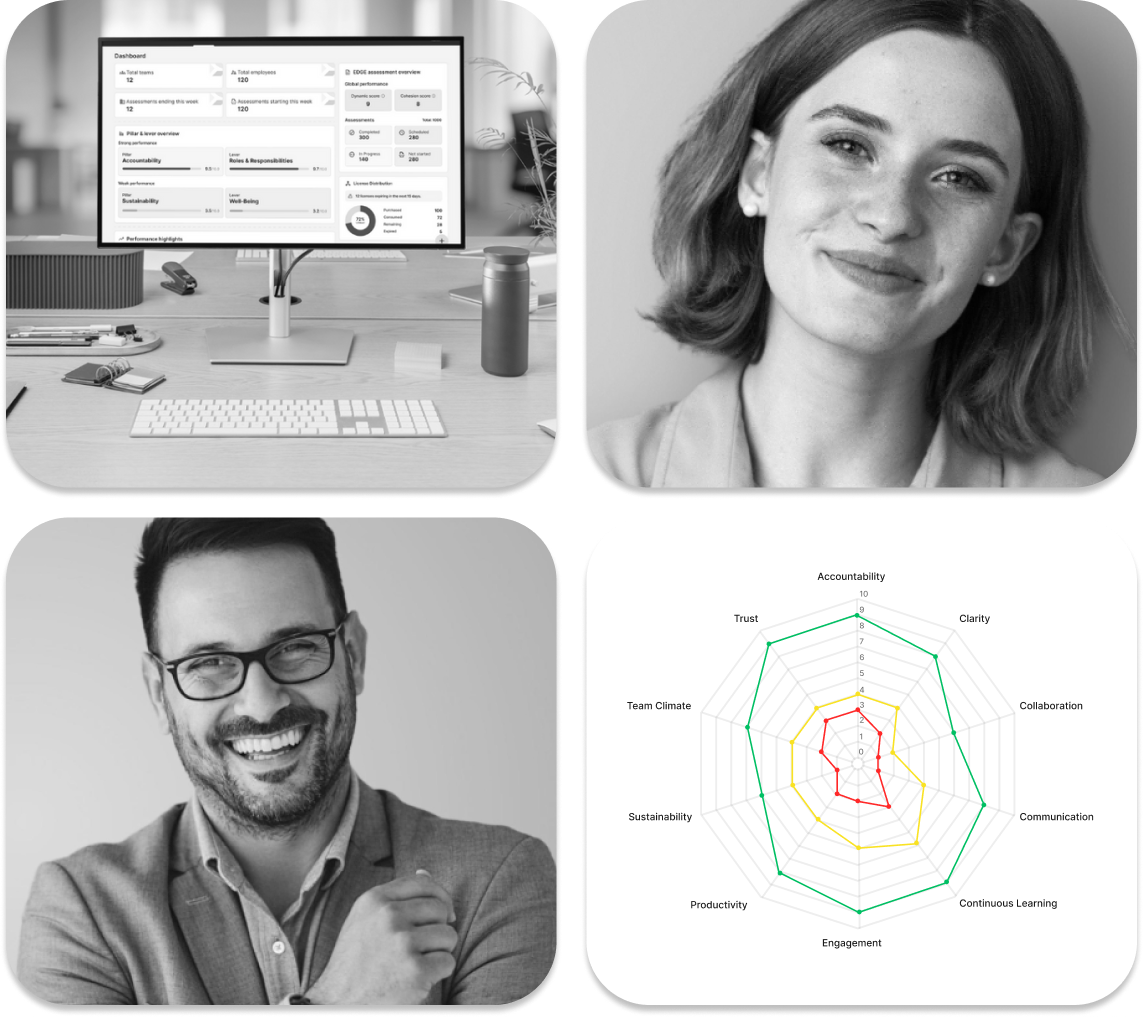
The Grozaic Team Dynamics Assessment evaluates these dynamics across ten interconnected pillars, including trust, clarity, accountability, collaboration, communication, sustainability, engagement, productivity, team climate, and continuous learning. It surfaces where talent is being fully leveraged - and where it is being quietly constrained.
Because technology will continue to evolve.
But the human system behind it remains the decisive factor.
A Final Reflection
Where might talent be getting wasted in your team because cohesion is missing?
Which dynamic - pressure response, conflict avoidance, power imbalance, participation gaps, or sustainability strain - is most relevant right now?
The competitive advantage in 2026 will not belong to the organization with the most tools.
It will belong to the one that understands how its people perform together under pressure.
That is the human code behind sustainable performance.