

We’ve Been Measuring the Wrong Thing: The Next Evolution of Team Performance

We’ve learned to measure individuals, leaders and culture. Now it’s time to understand the team itself.
Walk into almost any leadership meeting and, before it has finished, you will already have formed an impression of how the team is functioning.
You notice who speaks freely and who holds back, whether people are comfortable challenging one another, how decisions are made and whether everyone is genuinely aligned when the conversation moves on. Often, you leave with a sense of something happening beneath the surface that is difficult to articulate, yet unmistakable when you experience it.
Leaders have always been able to feel the dynamics of a team. What we have been less able to do is understand them with any real clarity.
For decades, organizations have invested heavily in understanding the factors that influence performance. We have become increasingly sophisticated at assessing individuals, developing leaders, measuring engagement and understanding organizational culture. Each of these disciplines has contributed enormously to the way we lead organizations today.
Yet leadership teams across industries continue to encounter remarkably familiar challenges: communication becomes difficult, accountability is inconsistent, decisions take longer than they should, collaboration suffers and execution loses momentum.
The more time I have spent working with leadership teams, the more convinced I have become that there is an important part of organizational performance we have yet to understand with the same rigor.
It exists in the space between people.
Team performance emerges through the quality of the interactions that happen every day: the conversations people have, the assumptions they challenge, the clarity they create around decisions and ownership, and the trust that allows disagreement to strengthen a team rather than weaken it.
Over time, these interactions develop into patterns that shape how a team communicates, collaborates, makes decisions and executes.
I think of these patterns as the team’s invisible operating system.
When that system is working well, information flows naturally, difficult conversations can happen without damaging relationships, accountability feels shared and decisions move into action. When the underlying dynamics become less effective, we experience the consequences through the issues leaders regularly describe as communication problems, low engagement, poor accountability or slow execution.
This creates an important opportunity for leadership.
Across almost every other area of business, we have learned to strengthen human judgement with greater visibility. Finance combines experience with financial data, sales combines intuition with pipeline analytics, and marketing combines creativity with customer insight. Leadership has largely continued to rely on experience and observation to understand something as complex as the health of a team.
I believe that is beginning to change.
A New Way of Measuring Team Performance
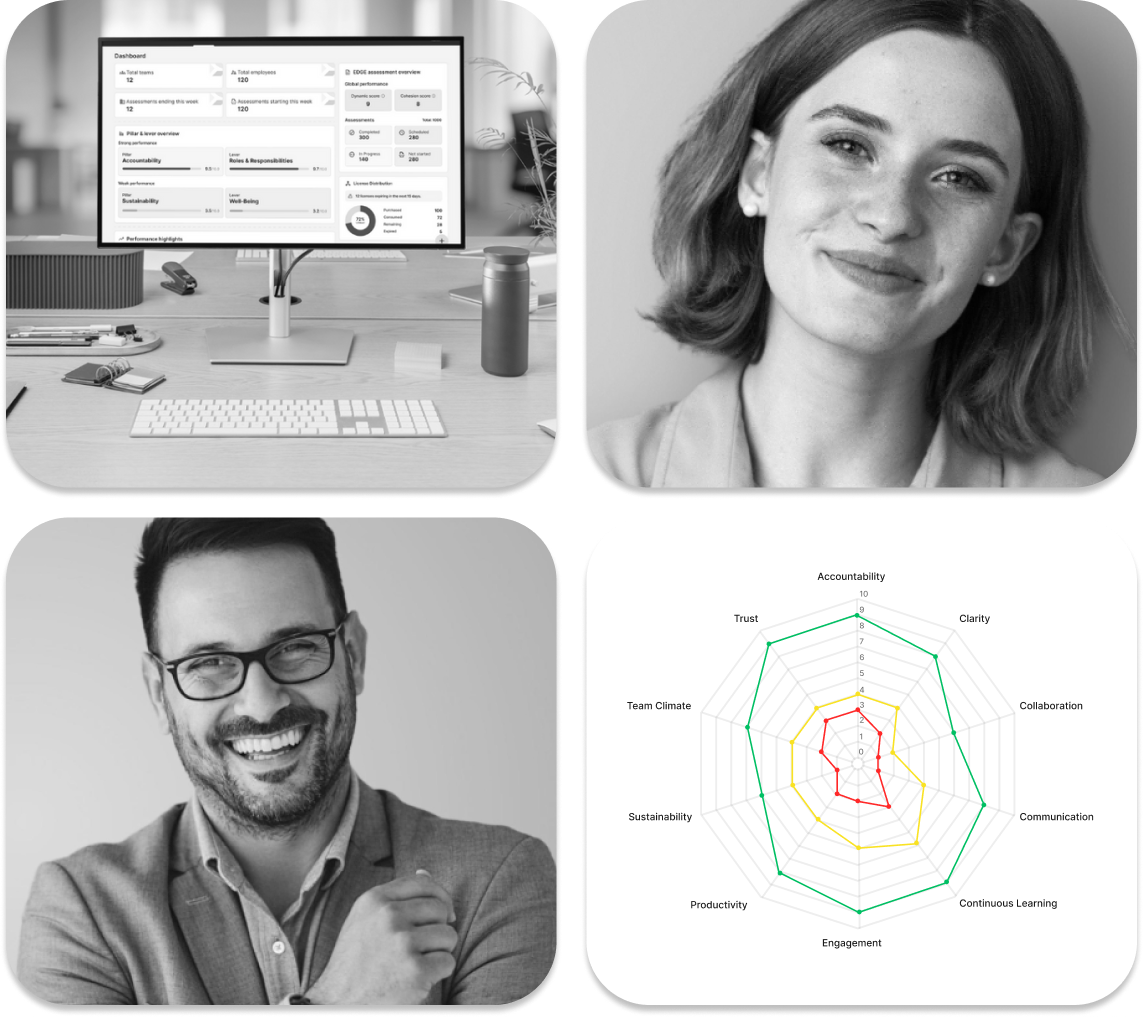
We have spent decades deepening our understanding of individuals, leadership and organizational culture. The opportunity now is to bring the same curiosity and rigor to the team itself: the living system created whenever people come together around a shared purpose, with patterns of communication, trust, accountability, decision-making and collaboration that quietly influence almost every outcome leaders care about.
The highest-performing teams I have worked with understand how they work together. They recognize the interactions that strengthen their performance, they can talk openly about what is happening beneath the surface, and they are intentional about improving the conditions that allow people to do their best work.
Perhaps this is where the next decade of leadership takes us: towards a richer understanding of the dynamics we have always sensed, yet rarely been able to see clearly.
Because so much of what determines the performance of a team is created in the space between people.
Start with the Team Dynamics Micro-Assessment to see where hidden friction may be affecting ownership, alignment, and execution in your team.